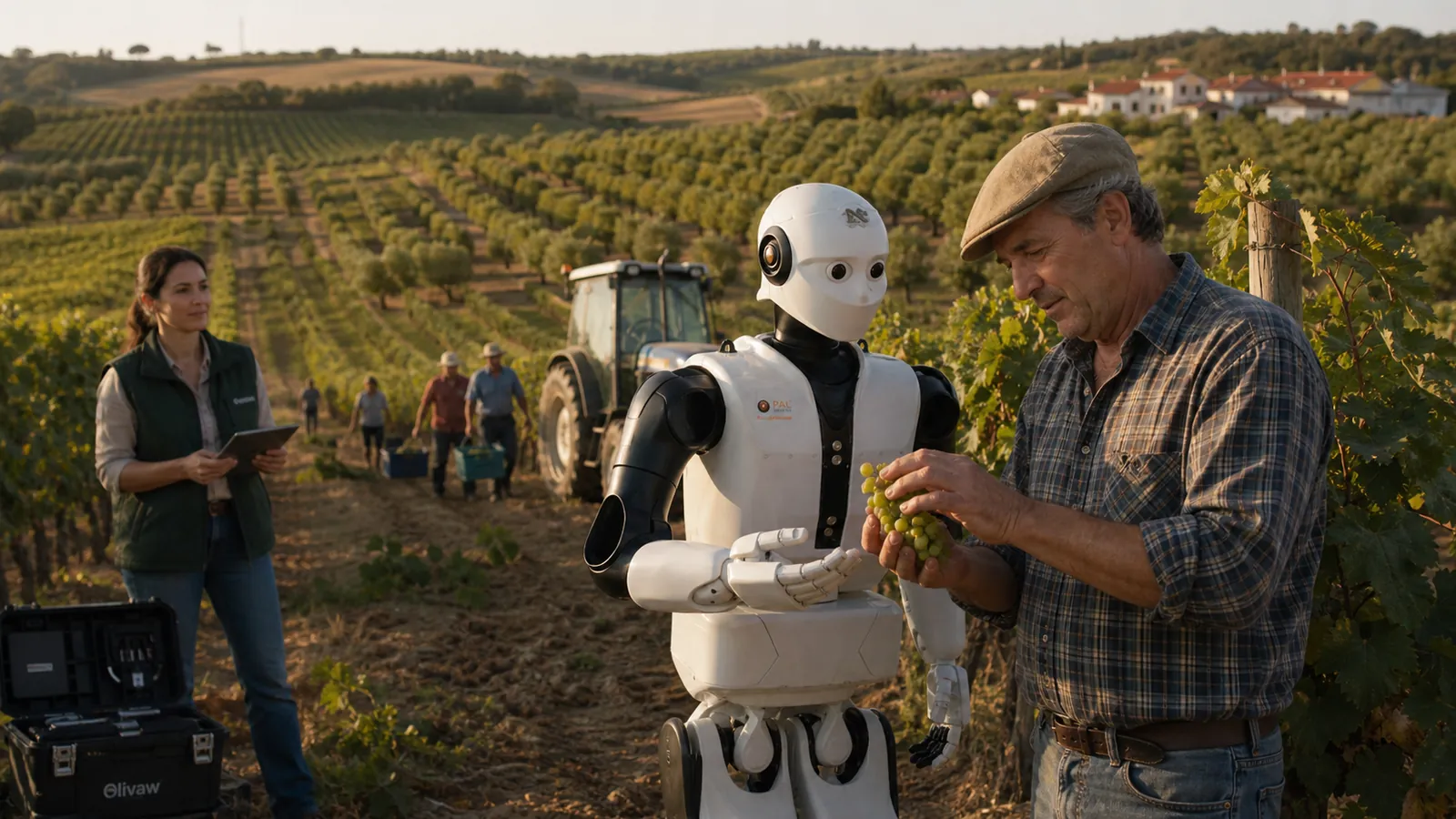
How do we teach a robot to be a good neighbour?
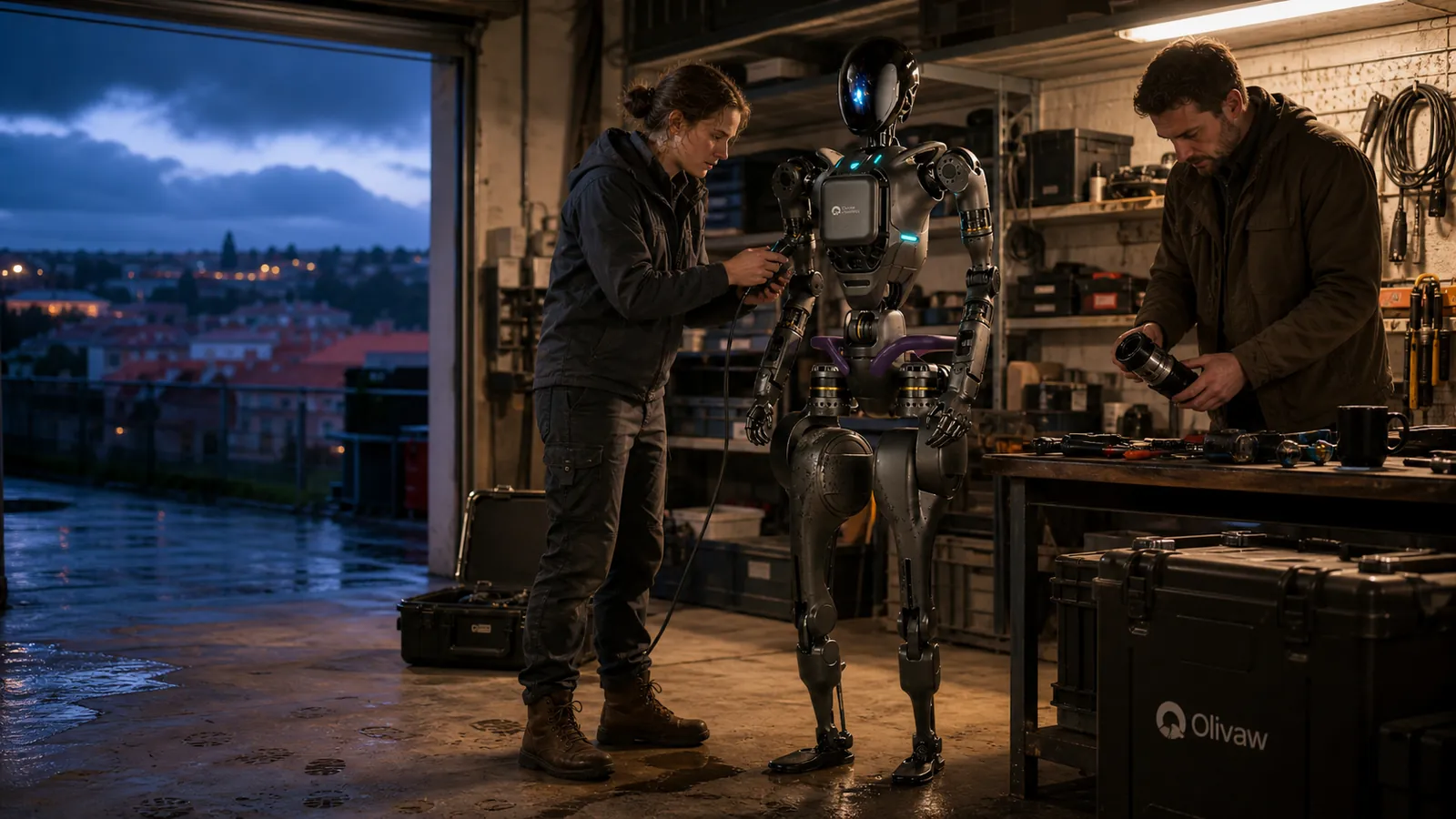
The lab in Caldas da Rainha is where the mind is grown. A town of around fifty thousand people in the Oeste region of Portugal, ninety kilometres north of Lisbon, and the place the robots actually live, not a site they visit for trials. What happens to them here, day after day, is the research.
Why a town, and why this one
The size matters more than it first appears. A village would give a robot too little to grow against, the same few faces and situations coming round again and again. A large city would give too much and notice too little; the robots would disappear into it, and the place would never really register them or answer back. A town holds enough ordinary complexity to learn from: a daily market in continuous operation since the fifteenth century, a thermal hospital older than that, schools, a polytechnic, design ateliers, agriculture, regulars and strangers, while staying small enough to feel the robots arrive.
A town used to receiving what arrives
Caldas does not begin from a static identity. It grew up around a thermal hospital that Queen Leonor founded in 1485, around the people who came to use it, around the ceramics tradition that started later, around twentieth-century manufacturing, and around recent arrivals, since about a fifth of residents now come from outside Portugal, across a range of languages and origins. The town carries five centuries of practice receiving whoever shows up, and folding what they bring into ordinary life. That practice forms the cognitive corpus the lab works against.
The town carries five centuries of practice receiving whoever shows up.
What growing a mind here looks like
Four things the robots have to learn are things this town does every day.
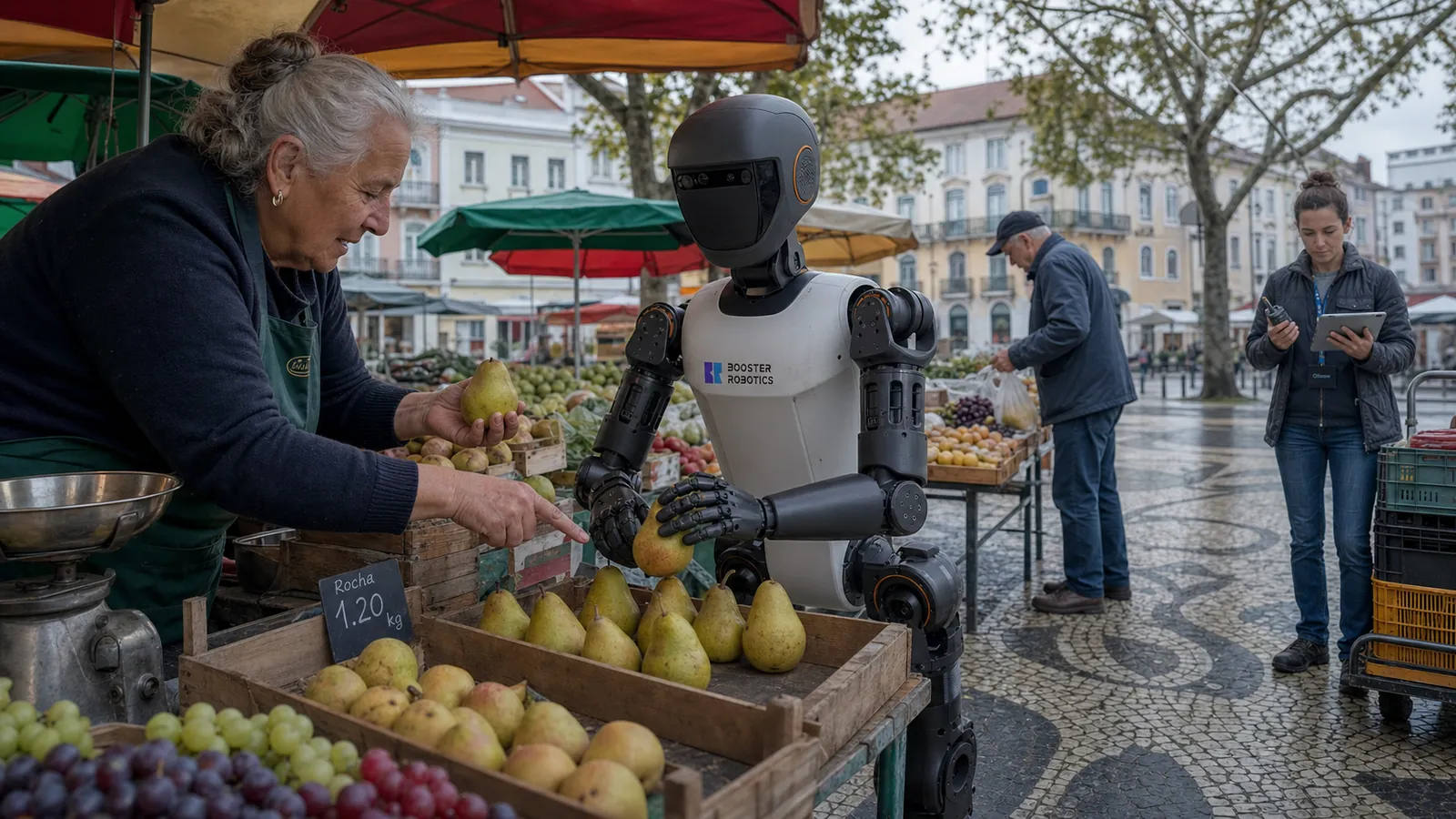
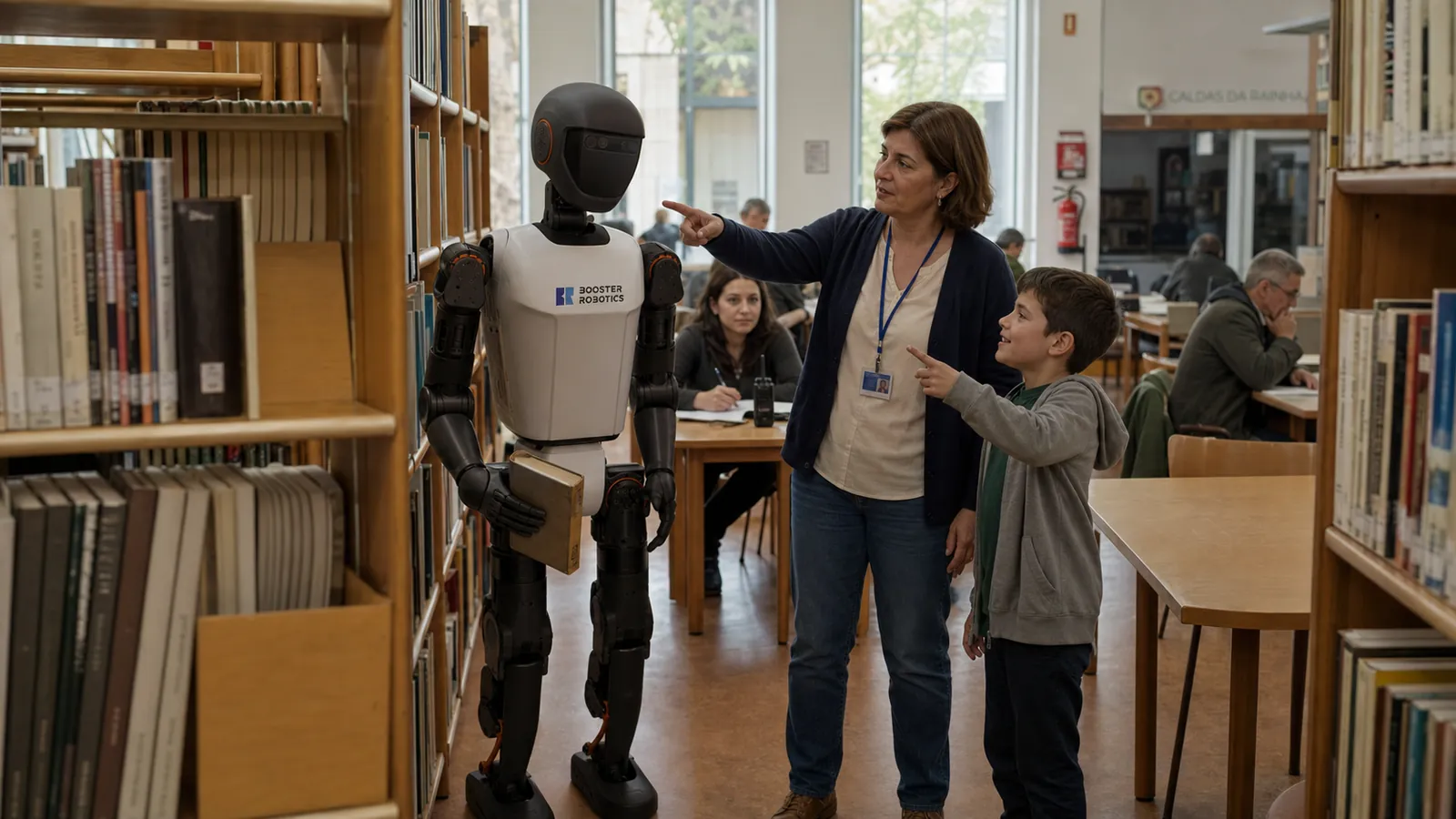
Relationships build slowly, in small exchanges that do not look like much: returning faces, remembered names, the read of a crowd. The market is one of the oldest places people do this, and most of what passes between them there is neither transactional nor social, but both at once.
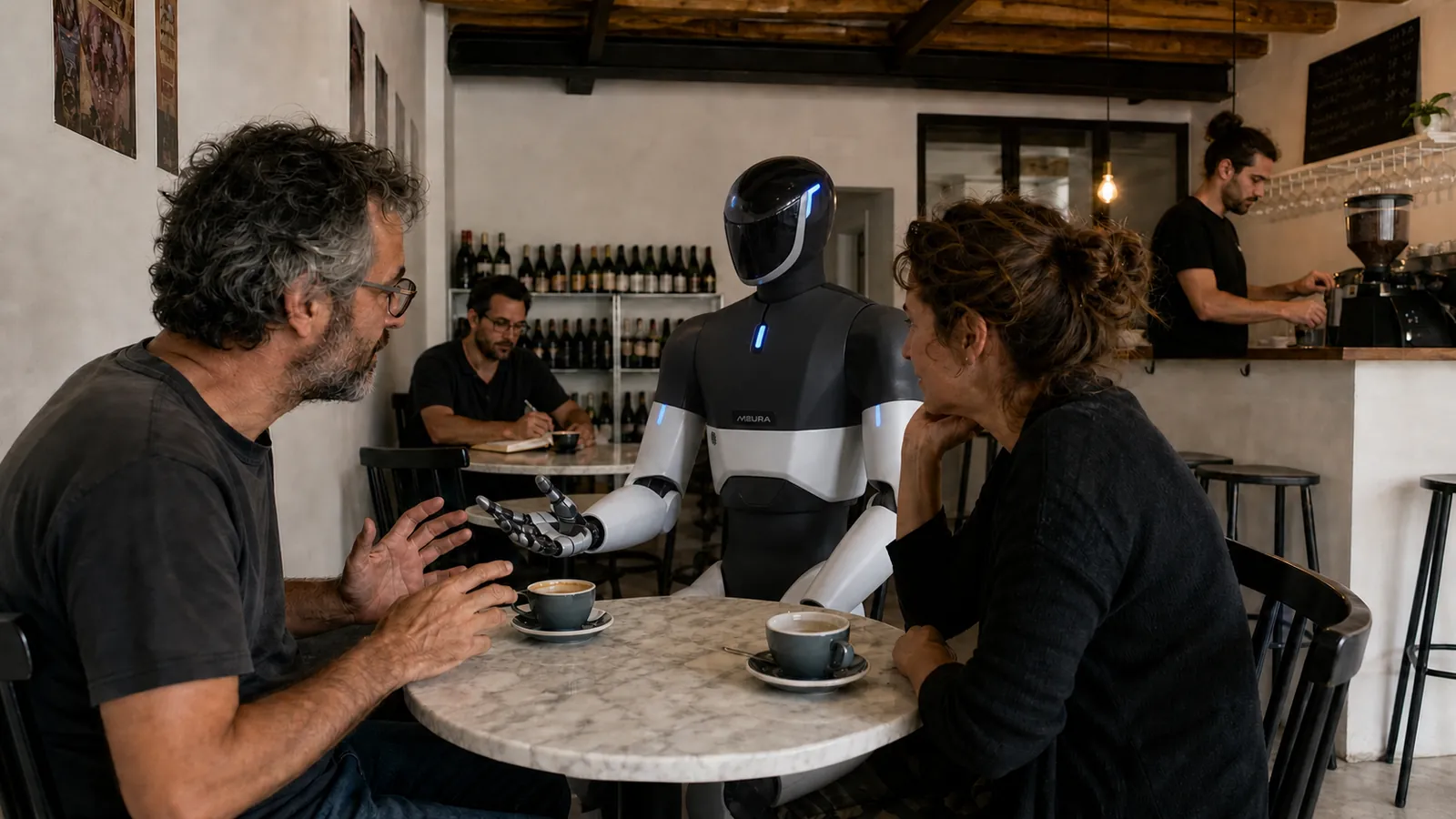
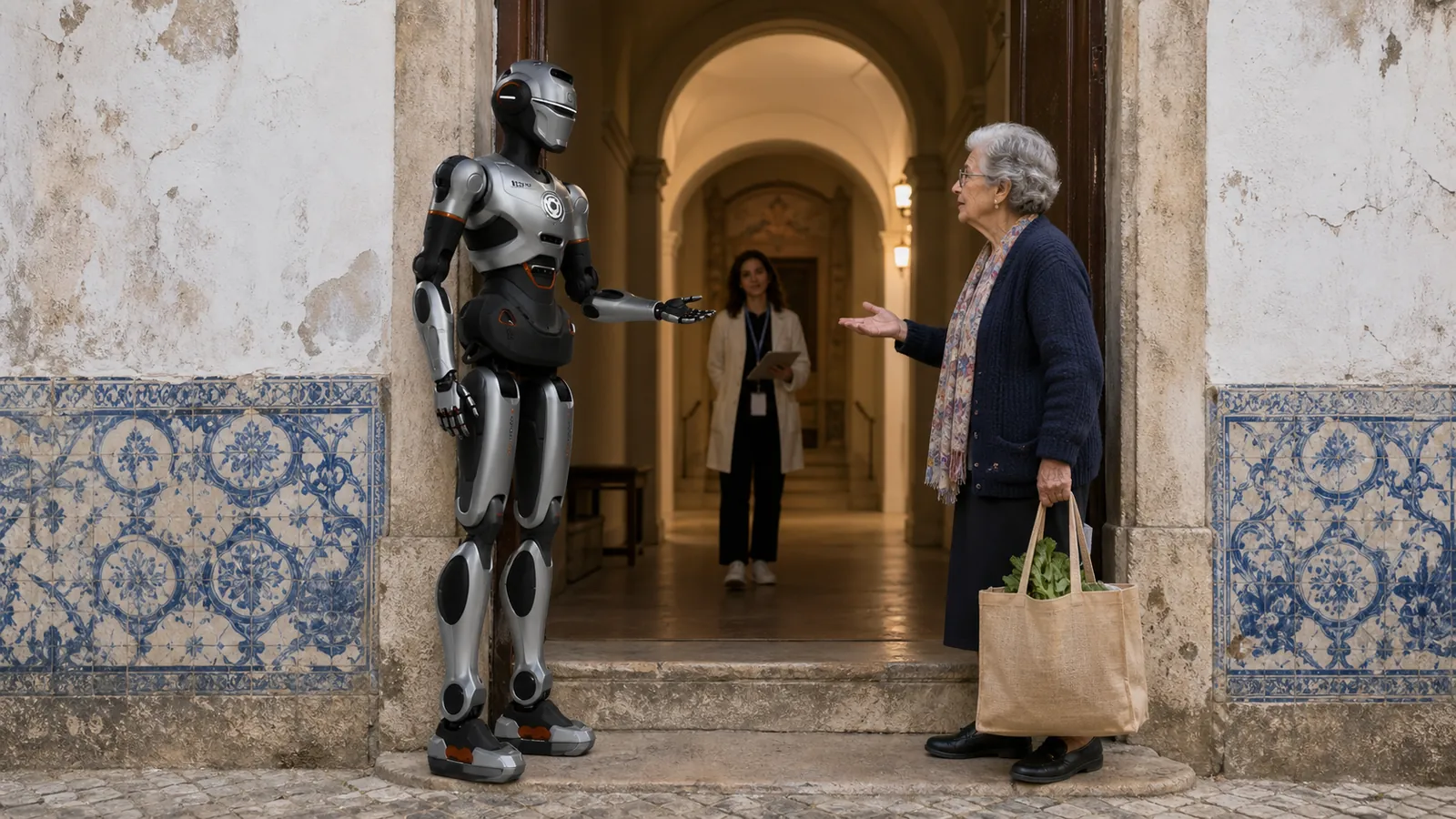
Welcoming the unfamiliar is a cognitive skill and not merely a courtesy. Caldas has been answering the question of what that takes since 1485.
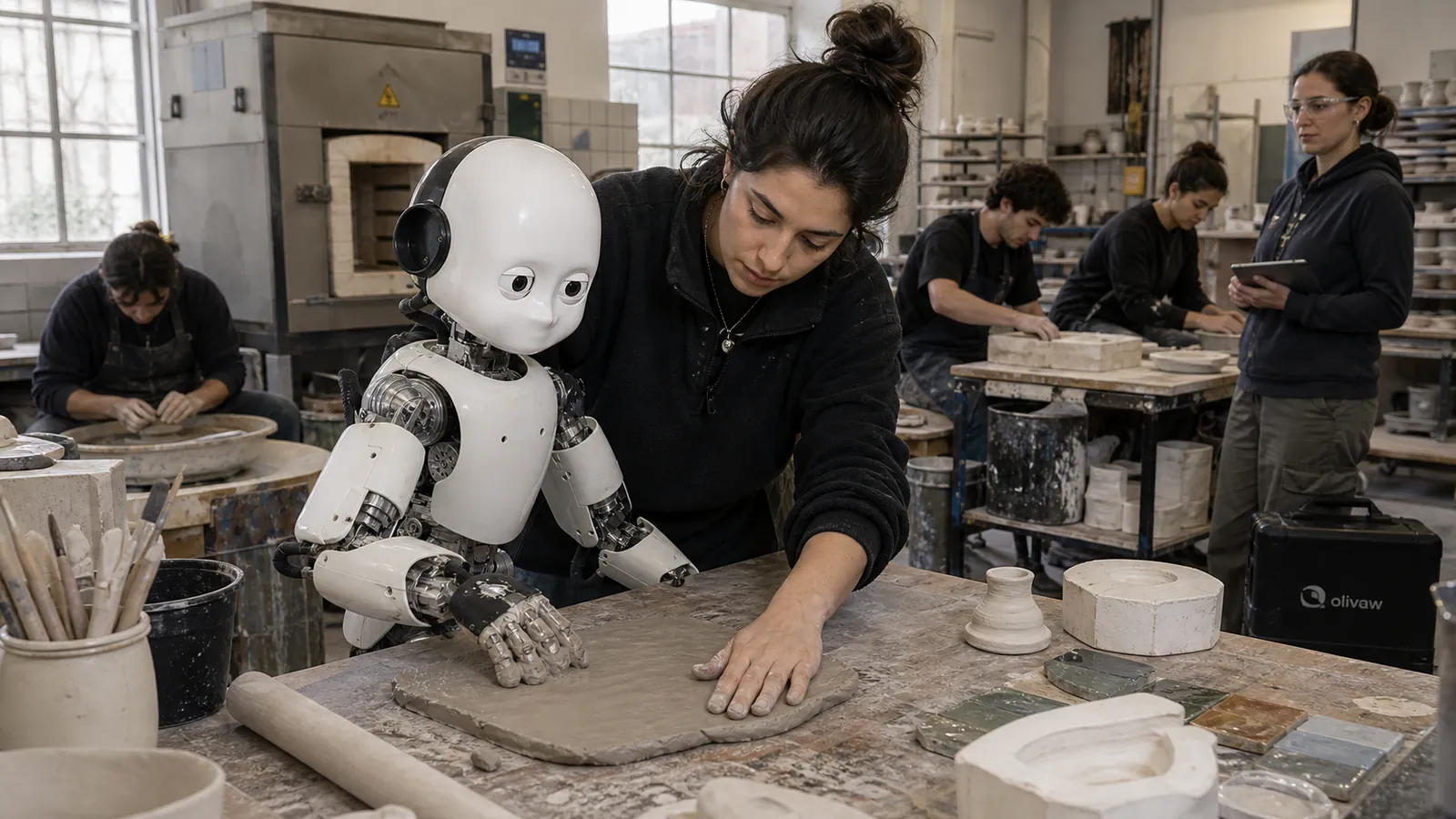
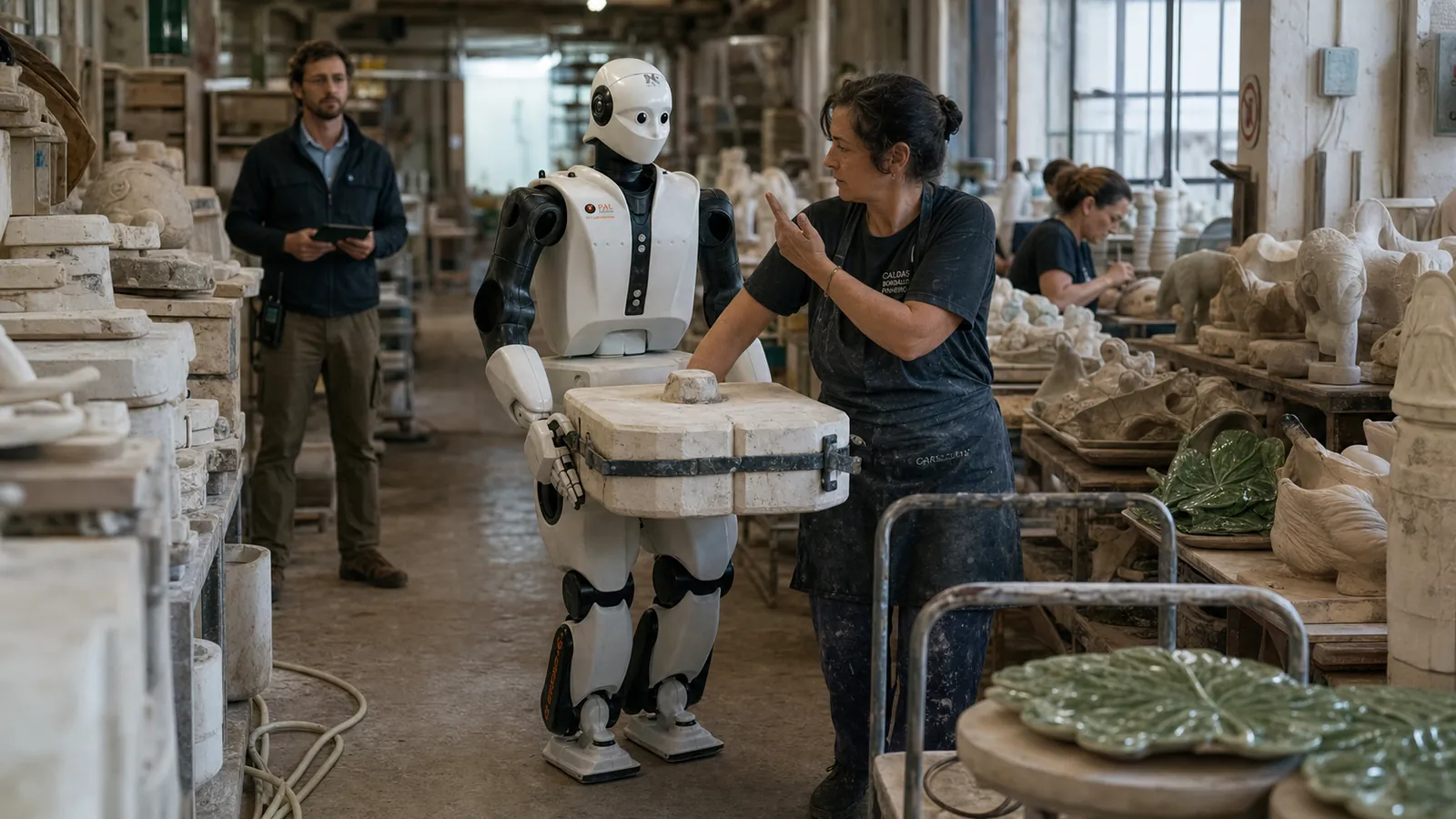
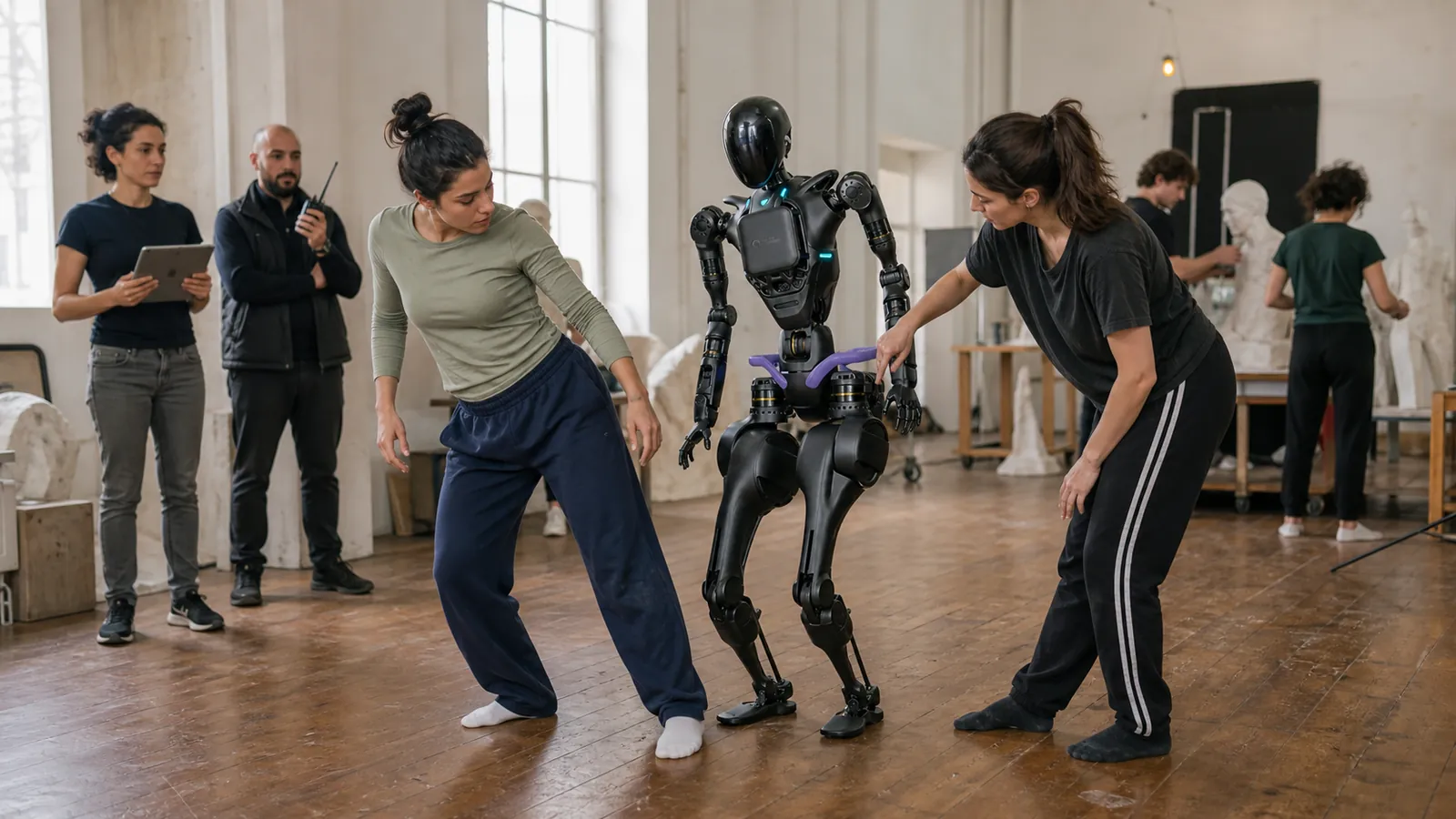
Some kinds of knowing only pass between people working side by side. Ceramics is accumulated judgement about clay, weather, mood and the way a wheel turns, and the lab is interested in whether a mind can pick it up the way a person does, standing next to someone who already has it.
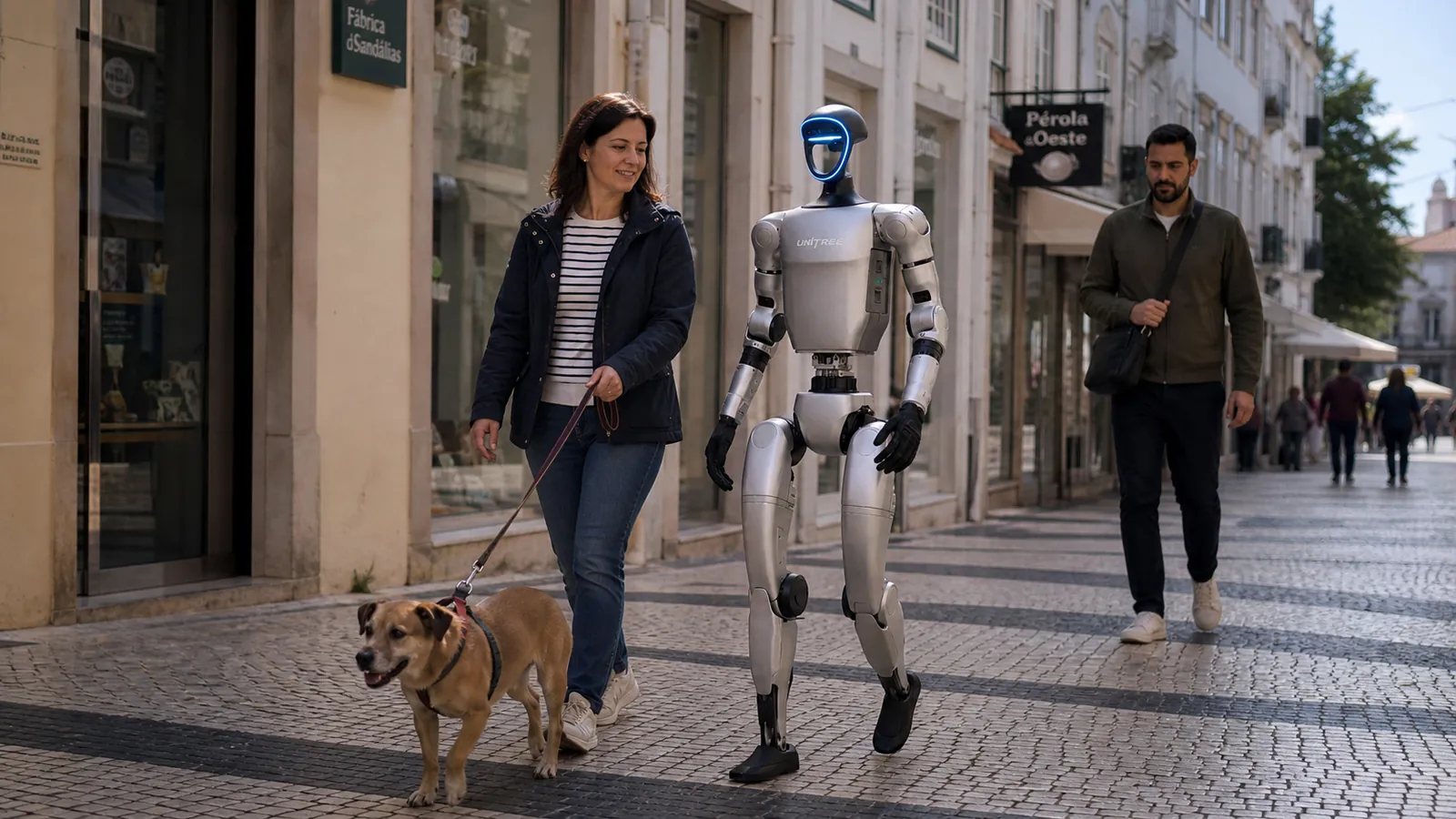
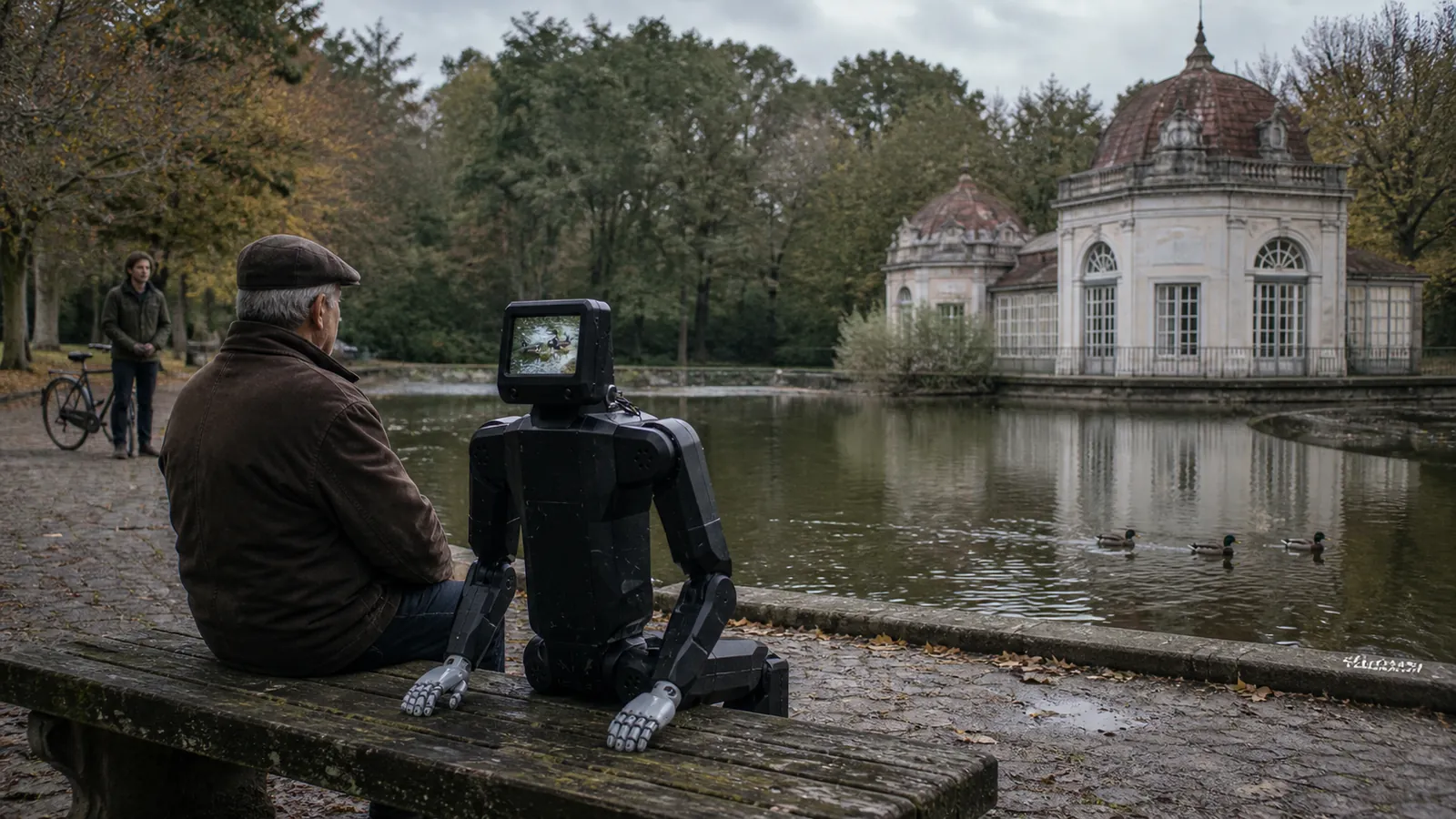
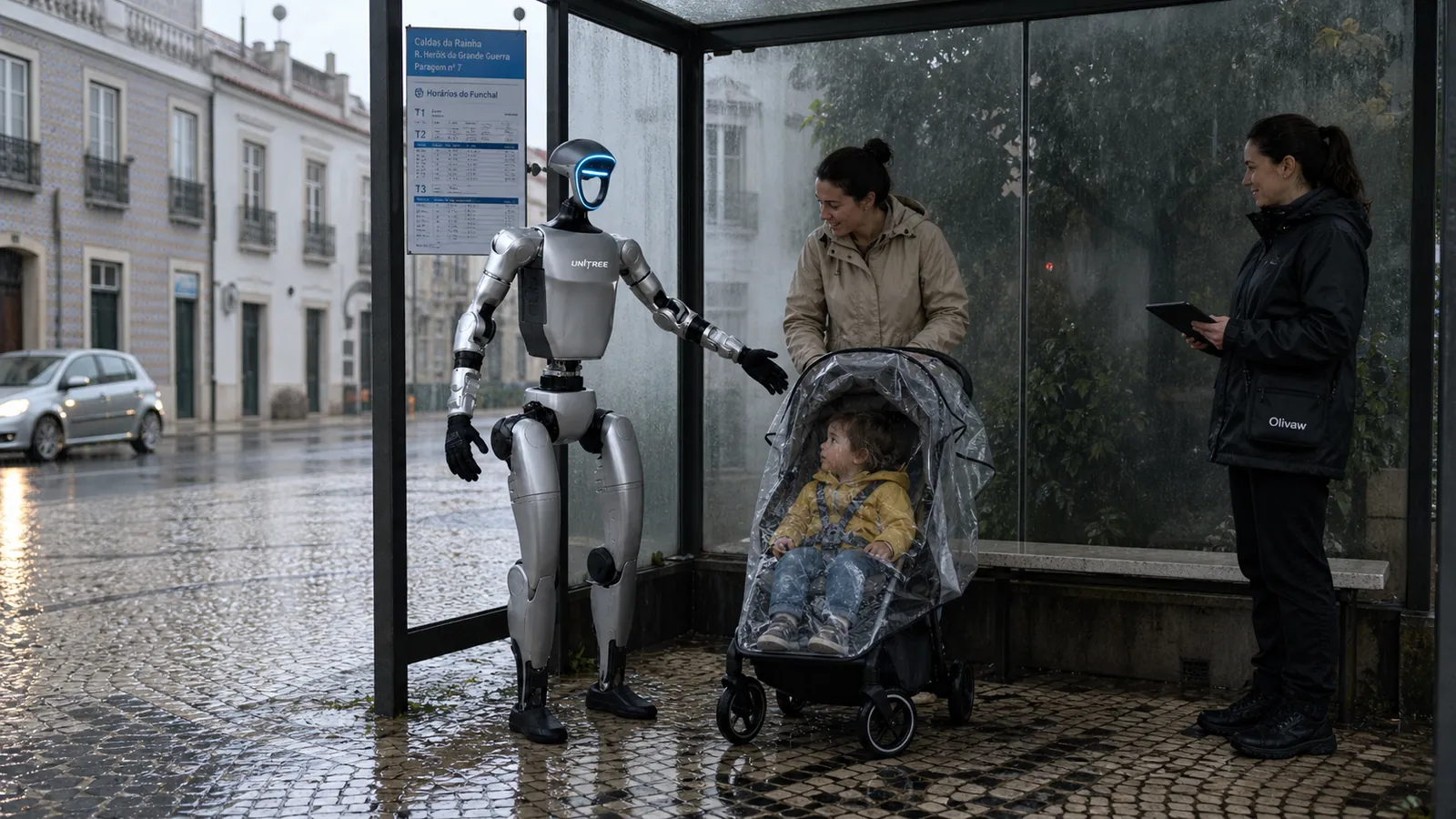
And trust builds in the everyday business of sharing space. Passing on a calçada, holding a door, being a regular. The streets are where the town decides who belongs, and the lab is working on what it takes for something new to earn a place.
Work for the people who live here
The lab brings between fifteen and twenty-five skilled jobs from year one, with the salaries spent locally. Research teams and visiting partners rent, eat, and live in Caldas. The work attracts robotics and AI groups that need a real-world deployment site, and over time a cluster grows: suppliers, spin-outs, services, and a credible path to robot manufacturing or assembly in the Oeste. Graduates of the Polytechnic of Leiria and ESAD.CR gain a local reason to stay rather than commute to Lisbon or leave Portugal. The Câmara can co-apply for the EU instruments built for exactly this kind of work, among them PRR Bairro Comercial Digital, the National AI Agenda and Horizon Europe, with the lab as a credible anchor.
A more capable town hall
The lab's founders bring particular expertise in modernising administrative systems with AI: routing, drafting, reconciling, and the routine work that grinds municipal services down when done by hand. The lab can pilot tools and processes for the Câmara itself alongside the research, so the administrative side of the town benefits directly from the work it hosts.
Care, and what it asks of a mind
Caldas has practised care since 1485. The thermal hospital still works; the Hospital do Oeste serves the region; the population ages across Portugal and across Europe; the questions about how a robot should behave around vulnerable bodies do not stay abstract here. The lab takes robots-in-care as one of its directions. What does a robot need to know to be near someone who feels unwell, or tired, or afraid, and how does it earn the trust a town extends to a healer? Caldas suits the work because the tradition still moves and the institutions still answer.
A creative city, still inventing things
Caldas joined the UNESCO Creative Cities network in 2019, in crafts and folk art. The lab fits that creative axis as much as the technical one. Robopsychology has not had a birthplace before; the field has been written about more than it has been done. Caldas could be where it gets done, in public, with the people who live here. ESAD.CR, the design school inside the polytechnic, works on health, on craft, on social design, and on the questions about what a humane technology looks like, all of which converge on the lab's research.
Robopsychology has not had a birthplace before.
A reason to stay
Technical and AI courses developed jointly with ESAD.CR and the Polytechnic of Leiria. Internships and apprenticeships for students at both institutions. Short upskilling programmes for residents who want to retrain. The pipeline runs in both directions: students gain a way into research that does not exist elsewhere in Portugal, and the lab gains local people who already know the town and want to stay.
Partnership, not backdrop
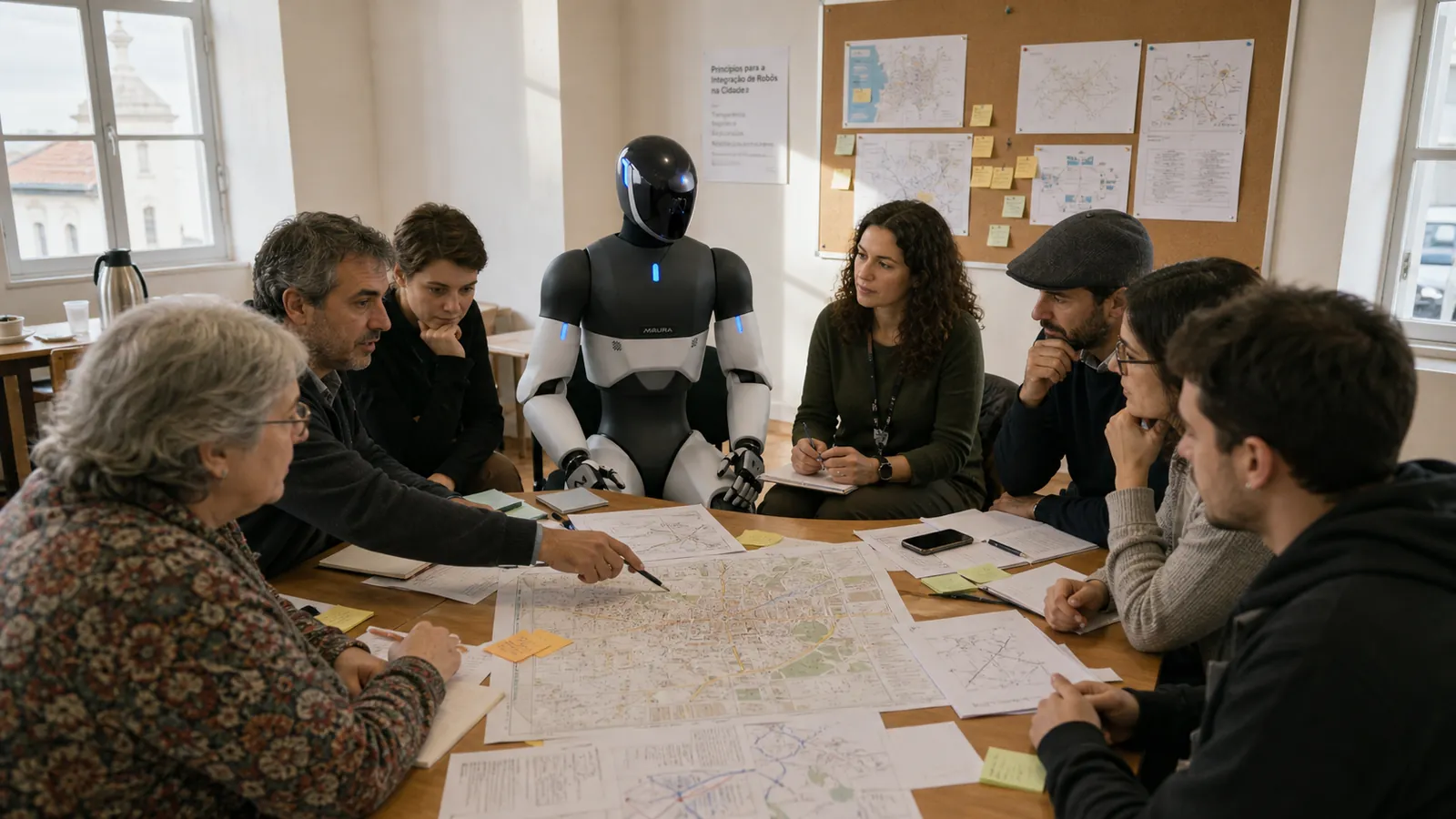
The town takes part as a partner rather than serving as a setting. The work proceeds with the municipality, with ESAD.CR, and with the Polytechnic of Leiria, and the lab builds the governance from the start: a citizen oversight board with real authority over where and when the robots operate, straightforward ways for residents to opt out, and clear safety arrangements, including the means to stop a robot at any time, that stay outside negotiation. The lab answers to the town because the town is the work.